

Professor Sandrine Thuret Dr. rer. nat. FHEA
Professor of Neuroscience
- Co-Head of Department, Basic & Clinical Neuroscience
Research interests
- Neuroscience
Contact details
Biography
Sandrine Thuret is Professor of Neuroscience at Institute of Psychiatry, Psychology & Neuroscience at King's College London.
Sandrine leads the Adult Neurogenesis & Mental Health Laboratory. The central theme of the lab is adult hippocampal neurogenesis, which is implicated in memory formation and mood regulation. They investigate environmental and molecular mechanisms controlling the production of these adult-born neurons and how they impact mental health. They study neurogenesis in healthy ageing as well as in the context of diseases such as Alzheimer’s and depression. By approaching neurogenesis in health and disease, the strategy is two folds:
- Validating the neurogenic process as a target for prevention and pharmacological interventions.
- Developing neurogenesis as a biomarker of disease prediction and progression.
She is also the Co-Head of Department of Basic and Clinical Neuroscience and the Chair of King’s Research Degrees Examination Board.
Please see her Research Staff Profile for more detail
Find out more about my research:
Key collaborators:
- The European DCogPLast Consortium, EU
- Dr Tim Powell, King's College London, UK and Cornell University, USA
- Dr Yvonne Nolan, University College Cork, Ireland
- Sir Professor Simon Lovestone, University of Oxford, UK
Key publications:
- Du Preez et al., 2021. The serum metabolome mediates the concert of diet, exercise, and neurogenesis, determining the risk for cognitive decline and dementia. Alzheimers Dement.
- Dias et al., 2021. Intermittent fasting enhances long-term memory consolidation, adult hippocampal neurogenesis, and expression of longevity gene Klotho. Mol Psychiatry.
- de Lucia et al., 2020. Lifestyle mediates the role of nutrient-sensing pathways in cognitive aging: cellular and epidemiological evidence. Commun Biol.
- Borsini et al., 2019. The role of circulatory systemic environment in predicting interferon-alpha-induced depression: The neurogenic process as a potential mechanism. Brain Behav Immun.
- Egeland et al., 2017. Depletion of adult neurogenesis using the chemotherapy drug temozolomide in mice induces behavioural and biological changes relevant to depression. Transl Psychiatry.
Research

Ageing Research at King's (ARK)
Cross faculty consortium addressing ageing and healthy longevity.

Adult Neurogenesis & Mental Health
The central theme of the lab is postnatal or adult hippocampal neurogenesis (AHN), which is implicated in memory formation and mood regulation.
King's Institute for Human and Synthetic Minds
Stronger scientific, historical, social and cultural understanding of intelligence

Safe and sustainable diets for a healthy body and mind (SSuDs)
This Research Interest Group on Safe and Sustainable Diets for a Healthy Body And Mind provides a unique opportunity for the King’s research community to address the challenges of safe and sustainable diets across a range of health outcomes
News
King's celebrates second cohort of spinouts at the Spinout Accelerator Showcase
The Spinout Showcase, held at Bush House, marked the conclusion of King's Spinout Accelerator Cohort II, featuring five research-led ventures originating from...

Mechanism linking inflammation and prevention of neuron formation identified
A molecule linked to chronic inflammation disrupts the brain’s ability to create new neurons — uncovering a pathway with therapeutic potential for...

Third annual Demystifying Impact event explores entrepreneurial mindset
Staff and students gathered to hear about innovative approaches to ensuring research findings have impact in the real world through creating start up and spin...

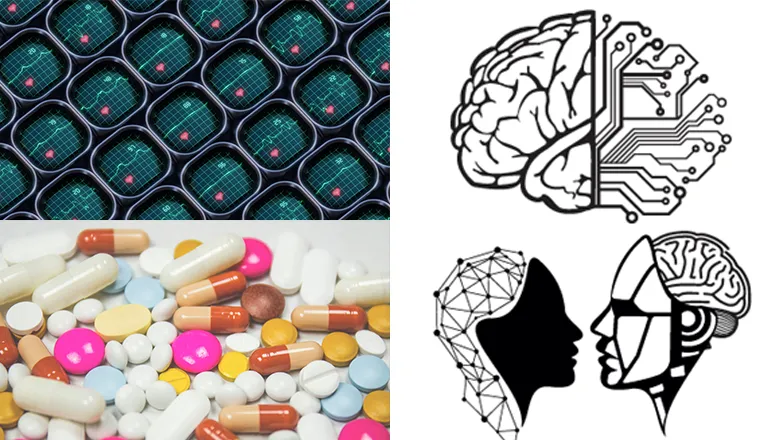
King's joins UK's first brain-inspired computing innovation centre
King’s has joined the UK’s first Innovation and Knowledge Centre (IKC) dedicated to neuromorphic computing hardware, established following a £12.8 million...
Meet the Spinouts on King's Spinout Accelerator Cohort II
Eight spinouts derived from King’s research community will explore the commercial potential of their research on the King’s Spinout Accelerator.
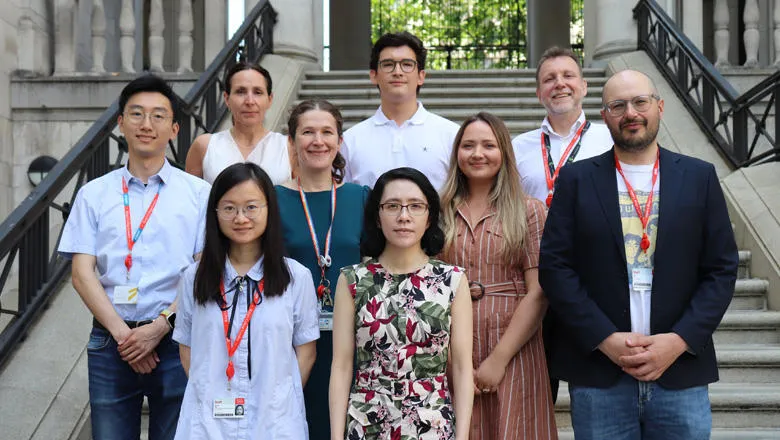
King's hosts leading scientists and national journalists for 'Science in the media' workshop
UK academics and researchers join journalists and media professionals for an introduction to the science media.
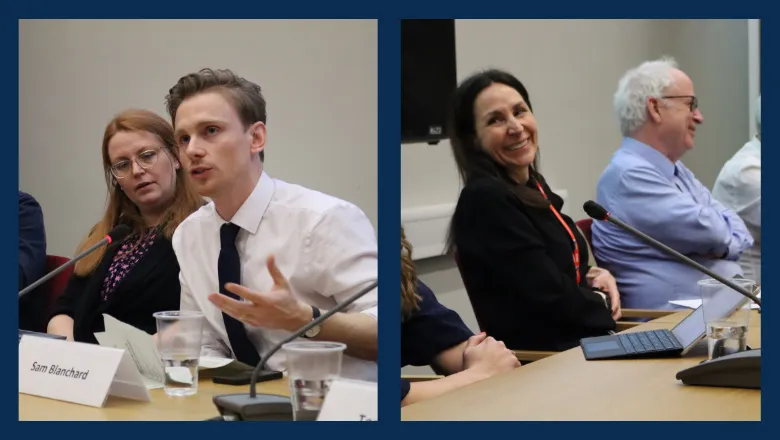
King's draws together expertise to make the world healthier and advance our understanding of intelligence
Two new multidisciplinary research institutes have been created at King’s to help tackle major challenges for society and find innovative ways to advance...
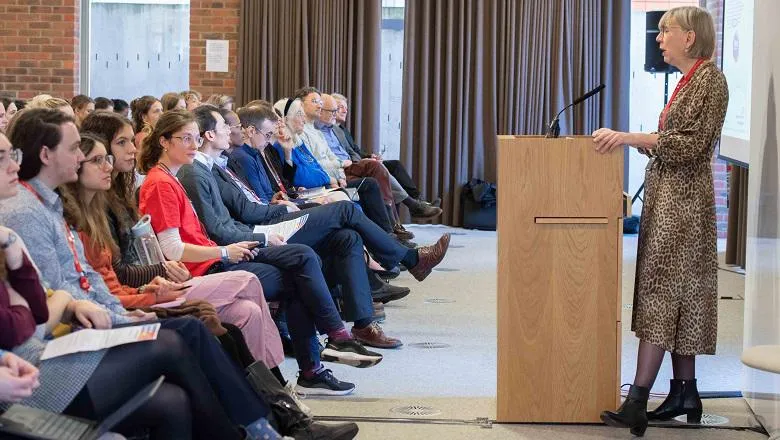
A showcase of research in eating and weight disorders celebrates the launch of CREW
A packed one-day showcase of inspirational talks and activities marked the opening of the new Centre for Research in Eating and Weight Disorders (CREW) at...
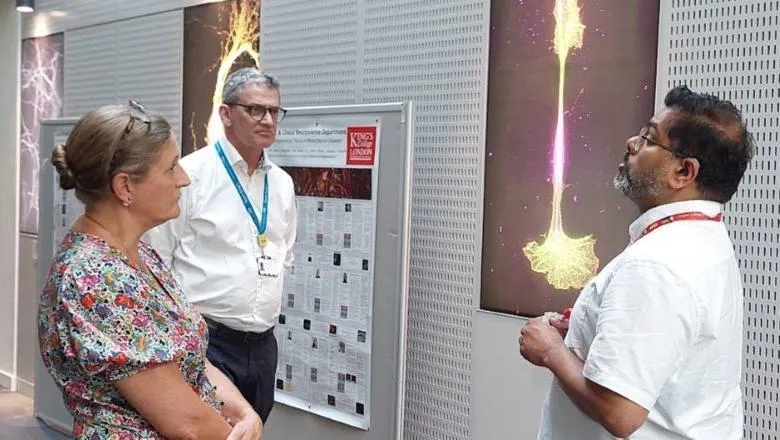
King's College Hospital Chief Officers Visit Maurice Wohl Clinical Neuroscience Institute
Professor Clive Kay and Dr Leonie Penna met with School of Neuroscience researchers to learn about clinical and academic partnerships.
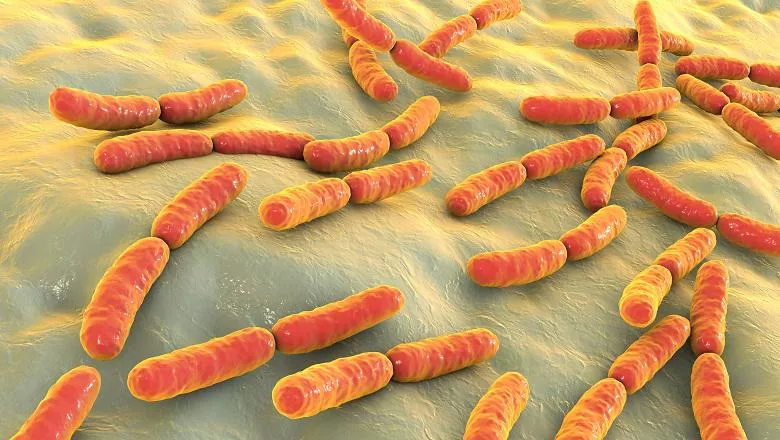
Scientists discover links between Alzheimer's disease and gut microbiota
New research has identified links between gut bacteria, inflammation and brain changes associated with Alzheimer’s disease.
Events
Research Showcase in Eating and Weight Disorders
Join us to celebrate the launch of the Centre for Research in Eating and Weight Disorders at King's College London, and discover research from the NIHR...
Please note: this event has passed.
Features
Intelligence, Creativity and Information Processing in the Human and Synthetic Minds
King's Institute for Human and Synthetic Minds (KIHSM) exists to build and support interdisciplinary work on the human brain and the synthetic models we use...

From researcher to founder: NeuroPrognostix
Every moment counts when it comes to dementia. Yet, too often, diagnosis comes too late. Professor Sandrine Thuret and Dr Edina Silajdzic are moving beyond...

Modelling the Minds
King's Institute for Human and Synthetic Minds co-directors talk about the research they’re doing to explore human and artificial intelligence and creativity.

Jogging Your Memory: How Exercise Helps You Grow New Brain Cells
Most of us have probably heard that exercise is good for the brain. Maybe from a friend working in science or healthcare, on TV, or while scrolling Instagram....

Research
Ageing Research at King's (ARK)
Cross faculty consortium addressing ageing and healthy longevity.
Adult Neurogenesis & Mental Health
The central theme of the lab is postnatal or adult hippocampal neurogenesis (AHN), which is implicated in memory formation and mood regulation.
King's Institute for Human and Synthetic Minds
Stronger scientific, historical, social and cultural understanding of intelligence
Safe and sustainable diets for a healthy body and mind (SSuDs)
This Research Interest Group on Safe and Sustainable Diets for a Healthy Body And Mind provides a unique opportunity for the King’s research community to address the challenges of safe and sustainable diets across a range of health outcomes
News
King's celebrates second cohort of spinouts at the Spinout Accelerator Showcase
The Spinout Showcase, held at Bush House, marked the conclusion of King's Spinout Accelerator Cohort II, featuring five research-led ventures originating from...
Mechanism linking inflammation and prevention of neuron formation identified
A molecule linked to chronic inflammation disrupts the brain’s ability to create new neurons — uncovering a pathway with therapeutic potential for...
Third annual Demystifying Impact event explores entrepreneurial mindset
Staff and students gathered to hear about innovative approaches to ensuring research findings have impact in the real world through creating start up and spin...
King's joins UK's first brain-inspired computing innovation centre
King’s has joined the UK’s first Innovation and Knowledge Centre (IKC) dedicated to neuromorphic computing hardware, established following a £12.8 million...
Meet the Spinouts on King's Spinout Accelerator Cohort II
Eight spinouts derived from King’s research community will explore the commercial potential of their research on the King’s Spinout Accelerator.
King's hosts leading scientists and national journalists for 'Science in the media' workshop
UK academics and researchers join journalists and media professionals for an introduction to the science media.
King's draws together expertise to make the world healthier and advance our understanding of intelligence
Two new multidisciplinary research institutes have been created at King’s to help tackle major challenges for society and find innovative ways to advance...
A showcase of research in eating and weight disorders celebrates the launch of CREW
A packed one-day showcase of inspirational talks and activities marked the opening of the new Centre for Research in Eating and Weight Disorders (CREW) at...
King's College Hospital Chief Officers Visit Maurice Wohl Clinical Neuroscience Institute
Professor Clive Kay and Dr Leonie Penna met with School of Neuroscience researchers to learn about clinical and academic partnerships.
Scientists discover links between Alzheimer's disease and gut microbiota
New research has identified links between gut bacteria, inflammation and brain changes associated with Alzheimer’s disease.
Events
Research Showcase in Eating and Weight Disorders
Join us to celebrate the launch of the Centre for Research in Eating and Weight Disorders at King's College London, and discover research from the NIHR...
Please note: this event has passed.
Features
Intelligence, Creativity and Information Processing in the Human and Synthetic Minds
King's Institute for Human and Synthetic Minds (KIHSM) exists to build and support interdisciplinary work on the human brain and the synthetic models we use...
From researcher to founder: NeuroPrognostix
Every moment counts when it comes to dementia. Yet, too often, diagnosis comes too late. Professor Sandrine Thuret and Dr Edina Silajdzic are moving beyond...
Modelling the Minds
King's Institute for Human and Synthetic Minds co-directors talk about the research they’re doing to explore human and artificial intelligence and creativity.
Jogging Your Memory: How Exercise Helps You Grow New Brain Cells
Most of us have probably heard that exercise is good for the brain. Maybe from a friend working in science or healthcare, on TV, or while scrolling Instagram....