

Professor Jonathan O’Muircheartaigh
Professor of Developmental Neuroscience and Imaging
Research interests
- Imaging sciences
- Neuroscience
- Child & Family
Contact details
Biography
Jonathan O’Muircheartaigh is a Professor of Developmental Neuroscience and Imaging at the Department of Forensic and Neurodevelopmental Sciences at Denmark Hill and the Centre for the Developing Brain at St Thomas' Hospital, joining King's College London back in 2005.
Early life adversity, environmental and neurological, can have long lasting consequences for the brain, altering what is considered to be “typical” neurodevelopment.
Dr O’Muircheartaigh’s research focus on how the human brain develops in vivo from fetal life in utero to late adolescence, focusing on the effect of preterm birth, childhood epilepsy and clinical exposures on the trajectory of brain development.
His lab is highly multi-disciplinary and the team includes neuroscientists, physicists, psychologists, computer scientists and paediatricians. He collaborates directly with clinical teams within King’s Health Partners as well as across the MRC Centre for Neurodevelopmental Disorders, aiming to translate findings forward to practical clinical use and back for mechanistic pre-clinical validation.
Research Interests
- MRI in the foetus and neonatal brain
- Brain networks in childhood epilepsy
- Novel analytic approaches to diffusion MRI
- Statistically modelling of brain development
Teaching
Brain Development, functional MRI, Brain Anatomy, Neurodevelopmental Conditions
Research

Longitudinal European Autism Project (LEAP)
The EU-AIMS Longitudinal European Autism Project (LEAP)
Project status: Ongoing
Brain Imaging in Babies (BIBS)
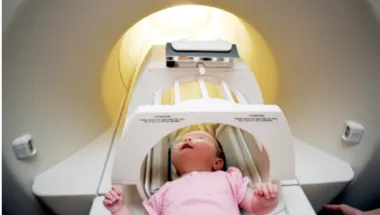
The Brain Imaging in Babies Study (BIBS) aims to improve understanding of how a baby's brain develops from before birth up until 3-4 years of age.

EU-AIMS (European Autism Interventions)
One of the largest ever research projects finding new ways to develop drugs for autism spectrum disorder (ASD).

Brain Health in Gen2020
Gen2020 researchers will map the potential impact of prenatal exposures such as Covid-19 on fetal and childhood brain development and outcomes.
News
New Wellcome Discovery Award to map children's brain development
Researchers at King’s College London have secured more than £3.9 million from Wellcome to launch an ambitious new study that could transform understanding of...

MRI research funded to detect sickle cell brain injuries in children
BMEIS researchers have received seed funding for a new project to advance MRI detection of Sickle Cell disease-related brain injury in children.

Events

Childhood Mental Health and Neurodevelopment Through a Mind-Body Lens
This event, organised by the NIHR BRC: Maudsley’s Child Mental Health and Neurodevelopmental Disorders theme, will bring together leading academics,...

Professor Jonathan O’Muircheartaigh - Inaugural Lecture
Join us in celebrating Professor O’Muircheartaigh's inaugural lecture on 'The why and when of imaging the developing brain.'
Please note: this event has passed.
Research
Longitudinal European Autism Project (LEAP)
The EU-AIMS Longitudinal European Autism Project (LEAP)
Project status: Ongoing
Brain Imaging in Babies (BIBS)
The Brain Imaging in Babies Study (BIBS) aims to improve understanding of how a baby's brain develops from before birth up until 3-4 years of age.
EU-AIMS (European Autism Interventions)
One of the largest ever research projects finding new ways to develop drugs for autism spectrum disorder (ASD).
Brain Health in Gen2020
Gen2020 researchers will map the potential impact of prenatal exposures such as Covid-19 on fetal and childhood brain development and outcomes.
News
New Wellcome Discovery Award to map children's brain development
Researchers at King’s College London have secured more than £3.9 million from Wellcome to launch an ambitious new study that could transform understanding of...
MRI research funded to detect sickle cell brain injuries in children
BMEIS researchers have received seed funding for a new project to advance MRI detection of Sickle Cell disease-related brain injury in children.
Events
Childhood Mental Health and Neurodevelopment Through a Mind-Body Lens
This event, organised by the NIHR BRC: Maudsley’s Child Mental Health and Neurodevelopmental Disorders theme, will bring together leading academics,...
Professor Jonathan O’Muircheartaigh - Inaugural Lecture
Join us in celebrating Professor O’Muircheartaigh's inaugural lecture on 'The why and when of imaging the developing brain.'
Please note: this event has passed.